
Why B2B Demand Generation Is Failing (And How a Founder Brand Fixes It)
Jul 09, 2026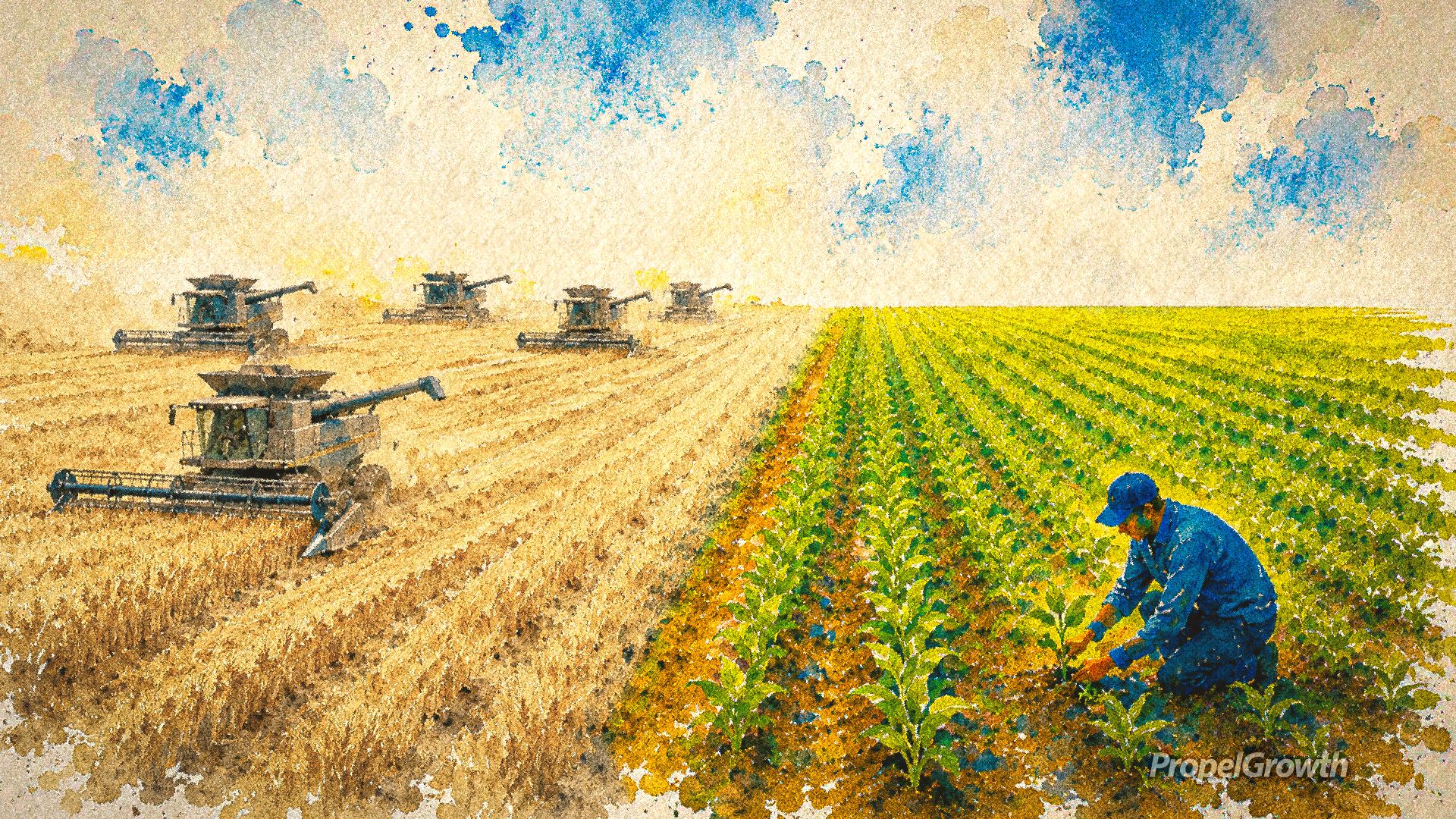
B2B demand generation is failing because most companies harvest demand but fail to plant. Capturing demand is easier to measure, easier to show ROI. But if you aren't planting, you won't have any demand left to harvest. A founder brand does the planting: it builds the visibility, credibility, and trust in your brand that produces a steady crop of new demand.
Around 2005, a new kind of software company started reshaping how executives think about marketing. Eloqua was already gaining ground. Marketo and HubSpot launched in 2006. Behind them came a flood. Scott Brinker's marketing technology landscape tracked about 150 vendors in 2011. Today it tracks more than 14,000.
These companies built their categories around a real shortcoming: marketing couldn't prove what worked. So they gave us the tools to fix that. They introduced the concept of the buyer journey. They gave us attribution models, lead scoring, and conversion paths. Some brands went further and preached "revenue marketing," where every dollar of budget goes to attributable actions.
They did a phenomenal job of setting expectations. CEOs, boards, and buyers came to believe that all marketing could be measured, and therefore all marketing should be measured. If you couldn't attribute it, you couldn't justify it.
Here's what almost nobody noticed at the time.
The martech companies didn't follow their own advice
While they sold the market on demand capture and attribution, the martech leaders were pouring money into something attribution can't measure: brand.
HubSpot didn't grow based on lead scoring. It grew by inventing a category called inbound marketing. It published content relentlessly and built a founder brand around Dharmesh Shah that still drives attention today. Marketo built Jon Miller into one of the most recognized voices in B2B marketing. These founders became synonymous with their categories. Their ideas shaped how a generation of marketers thought about their own jobs.
In farming terms, they sold everyone combine harvesters while quietly buying up seed, working the soil, and planting every acre they owned.
Their customers bought the harvesters and started reaping. Problem is, they skipped planting. Today, roughly 70% of most marketing budgets go to short-term demand generation. But that's a misnomer. They're not creating demand. They're capturing it.
They don't focus here because it works better than brand building. They focus budget on demand because it's easier to measure. What gets measured gets done.
So companies fund the tactics they can attribute and starve the things that made demand happen in the first place.
You can't harvest a field you didn't plant.
The data hasn't caught up with the problem
At any given moment, 95% of business buyers are not actively in market for the solutions you and your competitors offer. So all that harvesting equipment is pointed at the 5% who are in market, and everyone's harvester is pointed at that same 5%.
You can see the result in outbound performance. Craig Rosenberg points out that cold email response rates dropped from 8.5% in 2019 to 3.43% in 2026. Back in 2006, response rates were closer to 26% (that's a very rough estimate, because the tech to track that wasn't available back then). Pipeline is the top issue Rosenberg hears from nearly every founder and GTM leader he talks to. What worked three to five years ago is far less effective today.
Meanwhile, the research on what does move buyers keeps pointing the same direction. The Edelman-LinkedIn B2B Thought Leadership Impact Report found that 75% of decision-makers have researched a product or service they weren't considering because of a piece of thought leadership. And 86% say they'd invite a company that consistently produces quality thinking into an RFP process.
LinkedIn found that founders who post at least 10 times a year generate 33% more leads than founders who don't.
Gong found that deals close 22% faster when buyers feel they "know you."
Sendoso found that their closed/won rate was 1.7 to 3.4x higher when their executives were followed by someone in the prospect buying committee.
But the problem is that this impact is really hard to track.
Fewer than a third of the companies producing that content can trace a sale back to a specific piece. The impact of thought leadership and founder content is real. But it's really hard to measure. And the martech available today still doesn't solve the problem. The martech era trained us to only invest in what we can measure. But that's a terrible way to drive long term strategy.
Buyers want a human face
There's one more thing the research makes plain. Trust doesn't attach to logos. It attaches to people.
Edelman's research shows decision-makers consider an organization's thought leadership a more trustworthy basis for judging its capabilities than its marketing materials and product sheets. Buyers want to see how you think, not what your datasheet claims.
And nobody can show how a company thinks better than its founder. You're the one with the deepest understanding of the product and the problem. You're the one who can credibly speak to what your market cares about.
Gal Aga, CEO of Aligned, describes how the buying journey actually unfolds now: "people listen to you, feel connected to you, come to trust you, and then check out what you do." Notice where the product shows up in that sequence. Last.
That's the journey the attribution tools can't see, so they can't measure. The listening, the connecting, and the trusting all happen before the first form fill. By the time your dashboard registers a lead, most of the buying decision already happened in territory you couldn't measure.
Plant anyway
None of this means you should stop harvesting. Demand capture pays this quarter's bills. But it means the balance most companies run is backwards. The planting season is where the future crop gets decided, and it takes far more time and effort than the harvest does.
The martech founders understood this. They built the biggest brands in the industry while selling everyone else the measurement tools. Learn from what they did, not just what they sold.
Your buyers are out there right now, 95% of them not ready to buy, all of them deciding who they'll remember when they are. Show up as a human. Say useful things. Plant. Water. Weed.
This article is part of my founder brand series, which also includes Why a Founder Brand Is the Last Durable Competitive Moat in B2B, Your Founder Brand Won't Sprout for a Year. Plant It Anyway., Content Pillars for a Founder Brand, and You Don't Have Time Not to Build Your Founder Brand.
About the Author
"Your biggest competitor isn't another firm—it's your invisibility."
Candyce Edelen helps B2B founders build a founder brand that drives visibility, credibility, and authority. She surfaces your expertise from your conversations with clients and shapes it into strategic LinkedIn content. This builds trust with buyers before they're ready to buy. The result: improved customer acquisition costs, higher close rates, and bigger deal sizes. Candyce has been building founder brands as part of a go to market strategy for for over 25 years. During that time, she’s interviewed more than 250 executive-level buyers, and those interviews have shaped her understanding of how to help founders build credible authority that drives business results.
Supercharge your prospecting and social selling on LinkedIn!
Get actionable tips to up your social selling game. You'll get ideas to help you optimize your LinkedIn profile, attract ideal leads, grow your network and book sales meetings with your ideal prospects.
Check your inbox and spam folder for a confirmation email. We hate SPAM and want to confirm your subscription before adding you to our list. We'll never sell or share your information, and you can unsubscribe anytime.

